Battery simulation for reproducible testing in development and production
Battery simulators accurately and reproducibly replicate the behaviour of real batteries – for BMS testing, inverter test benches, e-mobility applications and production lines. Schulz-Electronic advises you on the most suitable topology, combines devices in a rack according to the manufacturer, and provides servicing and repairs in Germany.
Manufacturers for this application





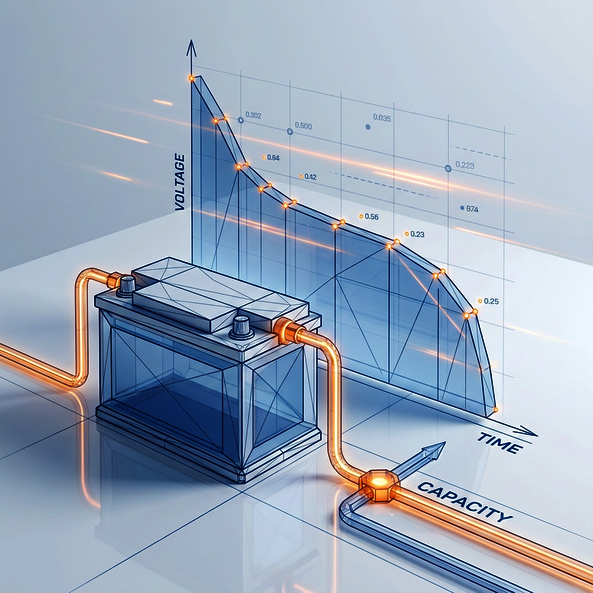
Accurately simulating battery states: for results that real batteries cannot deliver
In development and production, measured values must be repeatable. This is difficult with a real battery: every test run starts with a different state of charge, the cells age, and the temperature and internal resistance change. A programmable battery simulator replaces the battery in the test setup and delivers exactly the same current and voltage values in every run – regardless of cell chemistry, age or environmental conditions.
This transforms a single measurement into a reproducible test process, as required for BMS validation, inverter tests and end-of-line inspections in production.
Applications of battery simulation in development, test bench and production
Battery simulators are used wherever electrical energy storage systems are involved – from the development of new cell chemistries, through inverter and BMS test benches, to end-of-line testing in mass production.
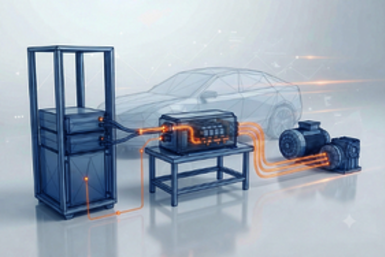
E-mobility & Inverter Tests
Battery simulators in the automotive sector replace the vehicle battery on the test bench: whether measuring energy recovery or testing inverters and converters under realistic load cycles. Bidirectional devices provide the load behaviour required for the development and validation of electric drives in electric and hybrid vehicles.
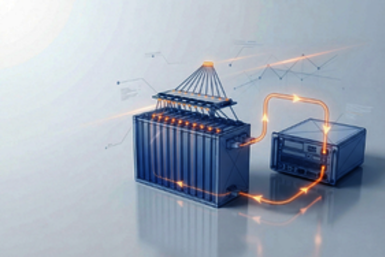
BMS Development & Validation
Battery management systems must respond correctly to cell variations, deep discharge and overvoltage. Programmable and controllable battery cell simulators replicate individual cells or entire packs – including fault scenarios that are difficult to reproduce safely using real cells.
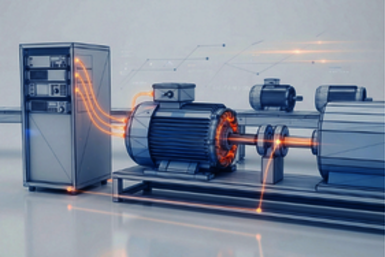
Engine test systems & end-of-line testing
Whether it’s window regulators or windscreen wipers: every test system for motor control units requires the same on-board power supply conditions – in both development and production testing. Battery simulators supply constant voltage and current in short cycle times, making test cycles comparable. When combined with loads and inverters, these form complete test benches for motor emulation and inverter testing.

Photovoltaics & Battery Storage
Inverters, hybrid inverters and grid controllers operate with fluctuating feed-in from modules and storage systems. Battery simulators can be used to replicate storage system charge states without having to wait for the right weather conditions or the position of the sun.
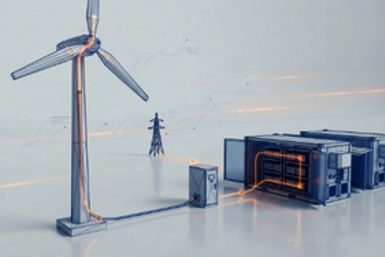
Wind power, battery farms & new energy
Large-scale stationary storage systems and grid-connected installations must also be able to reliably cope with extreme situations. Programmable DC sources and sinks simulate load flows and feed-in peaks in scalable power classes up to the MW range.
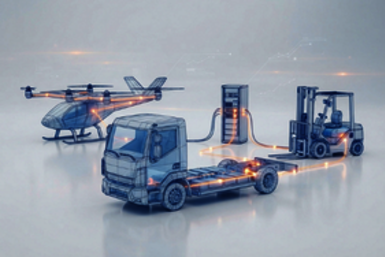
Other vehicles & special applications
Aviation, rail, shipping, defence technology: wherever systems are being electrified, battery simulators are replacing real batteries in test set-ups – whilst meeting the performance and safety requirements demanded by these industries.
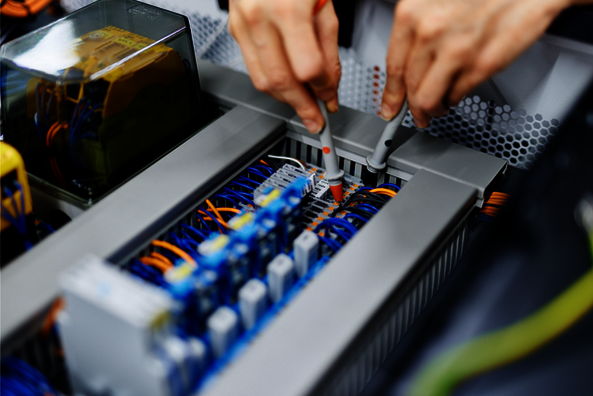
Suitable equipment for your battery simulation
Whether it’s a bidirectional DC source for inverter testing, a high-precision laboratory power supply for BMS validation, or a scalable system in the MW range: the appropriate topology depends on the device under test, the power class and the required control method. We stock equipment from a wide range of manufacturers and can advise you on the combination best suited to your application.
Typical test types: R&D, end-of-line and endurance testing
Depending on the stage of the product life cycle, battery testing places different demands on the system: during development, flexibility and attention to detail are key; in production, speed and repeatability are paramount; and in endurance testing, stability over weeks and months is essential. The appropriate topology and choice of equipment depend directly on the type of test.
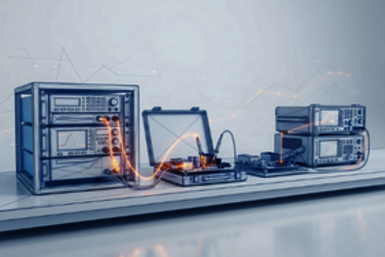
Development & Validation (R&D)
In the early stages of a project, test benches must remain flexible: new cell chemistries are characterised, BMS functions are tested against boundary conditions, and inverters are tested under varying driving profiles. What is required here are programmable battery simulators with high dynamic response, precise control and open control interfaces for custom test scripts.
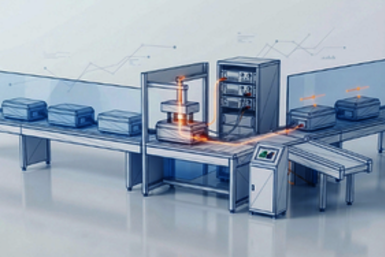
End-of-line tests in production
At the end of the production line, cycle time and reproducibility are what count. Every control unit, every module and every inverter must be tested under identical on-board electrical system or battery conditions – reliably, in high volumes and over many years. Robust systems with stable setpoints and fast communication interfaces are the norm here.
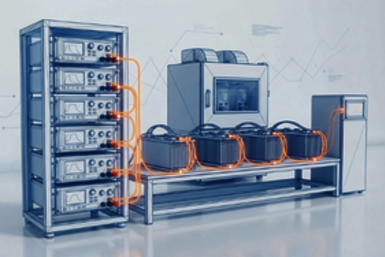
Endurance running & life cycle
Whether it’s a service life test, ageing simulation or thermal cycling: endurance tests run for days, weeks or months. The battery simulators used must provide stable readings throughout this period, continuously log measurement data and integrate seamlessly into higher-level automation systems.
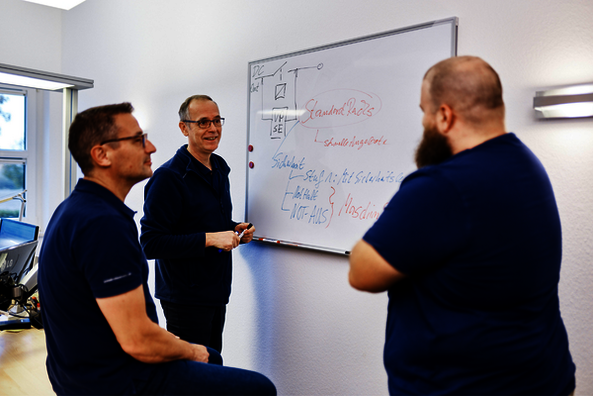
Schulz-Electronic: Your development partner for battery simulation
Engineering-level consultancy: Our technical sales team translates your specifications into the appropriate topology.
Rack-based system integration: We combine AC and DC power sources, loads and battery simulators in bespoke racks. These are delivered ready for connection and can be controlled flexibly.
Manufacturer-independent selection: With 16 manufacturers in our portfolio, we select the right equipment for your application – from high-precision laboratory power supplies to systems in the MW range.
Authorised service centre in Germany: repairs, calibration and technical support are provided directly by us, without the need to send equipment abroad or go via third-party manufacturers.
Frequently asked questions about battery simulation
Depending on the manufacturer and application, the range extends from single-cell simulators with a few watts up to bidirectional systems in the megawatt range – typical of inverter test benches in the e-mobility sector. The decisive factors for selection are the current and voltage ranges of the device under test, the required dynamic response and whether bidirectional operation is required.
We integrate AC and DC power sources, loads and battery simulators into shared racks with individual control. This enables a modular setup that can be flexibly reconfigured – for example, if test specimens or power requirements change as the project progresses.
The devices supplied come with manufacturer-provided software and standard interfaces – typically LAN, USB, CAN and SCPI commands, depending on the model. This allows you to integrate your own test scripts and automation environments, such as LabVIEW or Python, directly. We do not supply automation software at PLC level – instead, we work with service providers or hand over to your in-house automation team.
For many devices in our range, yes. When selecting the right battery simulator in particular, it is worth carrying out a test in your own test setup before making an investment. Please contact us directly regarding the specific model – we will check availability on a case-by-case basis.
Please discuss your requirements with us
Do you have a specific application in mind, or are you still in the early conceptual phase? We’d be happy to advise you on which equipment and topology would be suitable for your test bench.
Request contact details now